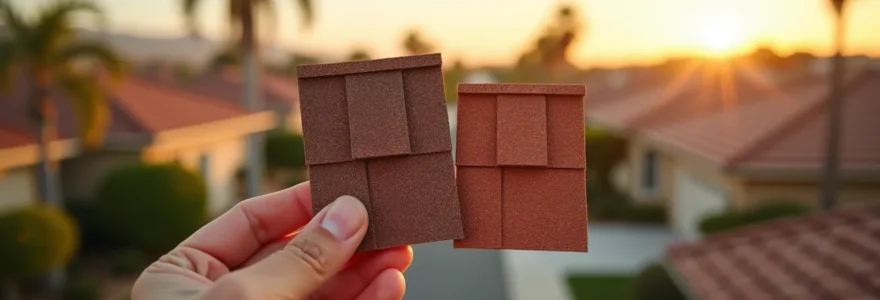
California homeowners face a critical inflection point when selecting roofing materials. The initial price differential between premium and standard options often obscures a far more consequential reality: inferior materials trigger a cascading sequence of structural, financial, and regulatory penalties that compound exponentially over time.
This isn’t about simple durability comparisons or warranty fine print. The decision to compromise on roofing material quality sets in motion a predictable chain of failures across four simultaneous vectors—structural integrity, energy efficiency, insurance eligibility, and property valuation. When combined with California’s intensifying climate extremes and stringent environmental codes, these vectors create a cost multiplication effect that transforms a modest upfront saving into a catastrophic long-term liability.
Working with a qualified roofing company that prioritizes material verification and environmental compliance becomes essential in this context. The pathway from revealing these hidden systemic costs to establishing a multi-level protection framework requires understanding not just what can go wrong, but the precise mechanisms through which material compromises metastasize into financial disasters.
The following analysis deconstructs the cost architecture of roofing material decisions, examines California’s unique environmental testing requirements, and provides operational frameworks for verifying quality delivery at every stage of the installation process.
Roofing Material Quality in 5 Critical Insights
- Inferior roofing materials create compounding cost penalties across structural damage, energy inefficiency, insurance restrictions, and property devaluation
- California’s environmental testing standards expose material failures through Class-A fire ratings, wind uplift thresholds, and water penetration protocols
- Only 7% of contractors achieve manufacturer certification, making credential verification essential for quality assurance
- Material substitution prevention requires documented batch tracking, independent laboratory testing, and daily on-site verification protocols
- Insurance-backed warranties and contractual protections provide enforceable quality guarantees beyond standard workmanship coverage
The Compounding Cost Architecture of Inferior Roofing Materials
The true cost structure of roofing materials operates through multiplication rather than addition. When a homeowner selects substandard materials to capture immediate savings, they inadvertently activate four simultaneous deterioration pathways that interact and amplify each other over the system’s operational lifespan.
Market conditions have intensified the financial stakes of this decision. Recent industry analysis reveals roofing materials up 20% over the past two years, transforming the replacement cycle into an increasingly capital-intensive event. This inflation pressure makes the longevity differential between material grades far more consequential than historical comparisons would suggest.
The structural damage progression pathway represents the most severe cost multiplier. Inadequate materials accelerate roof deck degradation through three mechanisms: moisture intrusion from compromised waterproofing layers, thermal cycling stress from poor heat dissipation, and mechanical failure at fastener penetration points. These failures rarely announce themselves through obvious leaks. Instead, they manifest as progressive wood rot, fastener pull-through, and sheathing delamination that remains invisible until a full tear-off exposes the extent of damage.
When structural repairs become necessary, the initial material savings evaporate instantly. A homeowner who saved $3,000 by selecting economy-grade shingles may discover $12,000 in deck replacement costs during the premature re-roof that occurs 8-10 years earlier than premium materials would have required.
| Material Type | Lifespan | Warranty Period | Replacement Frequency |
|---|---|---|---|
| 3-Tab Shingles | 12-15 years | 20-25 years | Every 12.5 years |
| Architectural Shingles | 25-30 years | Up to 50 years | Every 25-30 years |
| Metal Roofing | 50+ years | 40-50 years | Once per lifetime |
The energy cost multiplier operates continuously rather than episodically. Thermal inefficiency in subpar materials compounds with California’s extreme heat cycles to create permanent HVAC cost penalties. When exterior temperatures exceed 100°F—a routine occurrence across much of the state—roof surface temperatures can reach 160-180°F. Materials with inadequate solar reflectance and thermal emittance transfer this heat directly into attic spaces, overwhelming insulation systems and forcing air conditioning units into extended high-load operation.
The annual energy penalty for a 2,000 square foot home can easily reach $400-$600 in increased cooling costs. Over a 15-year period, this represents $6,000-$9,000 in pure operational expense that premium cool-roof materials would have eliminated.
California Roofing Cost Analysis 2025
Recent market analysis reveals California homeowners now spend an average of $15,000 for a 2,000 square foot roof replacement in 2025. Steep-pitched roof configurations add $1,000-$3,000 in safety equipment and labor costs due to fall protection requirements. Material costs per square foot increase significantly for partial replacements, highlighting the cascading cost penalties of delaying full replacement. The data demonstrates that fragmentary repair strategies ultimately cost 40-60% more than proactive full replacement with premium materials.
Insurance premium penalties and claim denials constitute the third cost vector. California insurers now systematically document roofing material specifications and condition ratings when underwriting policies in wildfire zones. Non-compliant or low-rated materials trigger coverage restrictions, higher deductibles, or outright policy non-renewal. The inability to obtain standard homeowners insurance forces property owners into the California FAIR Plan, which provides only bare-minimum coverage at premium rates.
Property valuation deterioration creates the final multiplication factor. Real estate appraisers in California’s competitive housing market apply quantifiable deductions for visible roofing degradation. Documentation from multiple markets shows 3-7% property value reductions when roof condition falls below « good » ratings. For a $750,000 home, this represents $22,500-$52,500 in lost equity—a permanent wealth destruction that far exceeds any initial material savings.
Cost Multiplication Factors to Calculate
- Calculate labor costs at 60% of total project budget ($9,000 of $15,000 average)
- Factor additional $1,000-$3,000 for steep pitch safety requirements
- Add permit costs ranging from $250-$1,000 for California compliance
- Include potential structural repair discoveries during replacement
- Account for energy efficiency losses from thermal inefficiency penalties
California’s Environmental Testing Requirements That Expose Material Failures
California’s environmental conditions and regulatory framework create a uniquely stringent testing environment that exposes material inadequacies invisible in moderate climates. The state’s building codes don’t merely recommend performance thresholds—they establish legally enforceable minimum standards that trigger warranty voids and insurance exclusions when violated.
The Class-A fire rating requirement represents the foundational environmental standard. In designated wildfire hazard zones covering much of the state, Class-A fire rating now required for insurance credits and policy eligibility. This certification requires materials to withstand intermittent flame exposure, spread flame resistance, and flying brand tests that simulate ember attack conditions during wildfire events.
Materials that achieve Class-A ratings through manufacturer testing often fail when installed incorrectly or when underlying deck conditions don’t meet code requirements. The rating applies to the complete assembly—not just the surface material—meaning that shortcuts in underlayment selection or ventilation design can nullify the fire protection even when premium shingles are used.
Wind uplift testing standards create the second critical performance threshold. California’s coastal zones and mountain passes generate sustained wind events that test mechanical fastening systems to failure. UL 580 wind uplift classifications establish minimum Class 90 performance, meaning materials must resist 90 pounds per square foot of uplift force without detachment.

The laboratory testing methodology for wind resistance reveals how subpar materials fail under stress. Test facilities apply negative pressure to roof assemblies while monitoring fastener pull-through, material tearing at attachment points, and progressive delamination of multi-layer systems. Materials that pass at Class 60 but fail Class 90 testing demonstrate adequate performance in moderate climates but catastrophic failure potential in California’s wind regime.
Water penetration testing under ASTM E2140 establishes zero-tolerance thresholds that reflect California’s intense but infrequent precipitation patterns. When the state receives rainfall after extended drought periods, the thermal shock and rapid saturation cycles stress waterproofing systems far beyond what gradual northeastern rainfall patterns would produce.
| Test Standard | Performance Metric | Pass Threshold | Failure Impact |
|---|---|---|---|
| ASTM E2140 | Water Penetration | Zero drops in 24hrs | Complete test failure |
| UL 580 | Wind Uplift | Class 90 minimum | Warranty void |
| ASTM D6083 | Mechanical Properties | Elongation/Tensile | Premature failure |
The ASTM D6083 mechanical properties testing evaluates material response to thermal cycling and UV exposure that California’s climate delivers relentlessly. Materials must maintain elongation capacity and tensile strength after accelerated aging protocols that simulate 20-30 years of environmental exposure. Subpar materials that pass initial installation inspection often fail these long-term durability tests, revealing brittleness and cracking that manifests years before expected replacement cycles.
Testing components and materials for quality and durability is essential in manufacturing. Organizations such as Underwriters Laboratories and ASTM International perform material tests to maintain high product standards.
– McElroy Metal Testing Division, Behind the Scenes: Testing Metal Roof Panels
The integration of these testing protocols into California’s building code enforcement creates a verification system where material inadequacy eventually surfaces through permit inspections, insurance audits, or warranty claim investigations. Homeowners who prioritize upfront cost savings over tested performance specifications discover these gaps only when seeking coverage renewal or filing damage claims.
Strategic Contractor Vetting Beyond Basic Licensing
The contractor selection process represents the critical control point where material specifications transform into physical installations. California’s licensing requirements establish minimum competency thresholds, but they fail to differentiate between contractors who deliver premium quality and those who optimize for speed and cost containment.
Manufacturer certification programs create the most reliable quality indicator beyond basic licensing. The statistical reality demonstrates the exclusivity of these credentials: just 7% of roofers earn GAF Certification across North America. This scarcity exists because certification requires documented training completion, quality installation audits, and financial stability verification that most contractors cannot or will not satisfy.
The certification process involves factory-led training on proper installation techniques specific to each product line, third-party inspection of completed projects to verify code compliance and manufacturer specifications, and maintenance of consumer complaint resolution systems that protect homeowner interests. Contractors who achieve Master Elite or Select ShingleMaster status gain access to extended warranty programs that non-certified installers cannot offer regardless of their workmanship quality.
Credential verification methodology must extend beyond reviewing certificates presented by contractors. The most reliable approach involves direct verification through multiple independent channels rather than accepting contractor-provided documentation at face value.
| Credential Type | Verification Method | Red Flag Indicators |
|---|---|---|
| State License | Department of Labor website | Name mismatch, expired status |
| Manufacturer Certification | Manufacturer directories | Not listed in database |
| Insurance Coverage | Direct carrier verification | Photocopies only provided |
| Business Registration | State business registry | Multiple name changes |
Insurance coverage verification demands particular scrutiny because inadequate contractor coverage transfers liability directly to property owners. General liability insurance protects against property damage and third-party injury claims, while workers compensation coverage protects against employee injury claims. Contractors operating without proper coverage expose homeowners to lawsuit risk if job-site accidents occur.
The verification protocol requires requesting a Certificate of Insurance directly from the contractor’s insurance carrier rather than accepting photocopies or expired certificates. The certificate should name the property owner as an additional insured party and confirm coverage remains active throughout the project duration. Carriers will only issue these certificates for legitimate policies, making this verification method highly reliable for detecting coverage gaps or fraudulent documentation.
Quality control isn’t just about workmanship; it extends to materials used. Contractors must verify materials meet project specifications and tolerances.
– John Kenney, Florida Roofing Quality Control Guide
Business registration history reveals patterns that licensing checks miss. Contractors who frequently change business names or operate under multiple entities may be evading complaint histories or regulatory actions. State business registries maintain ownership records and registration dates that expose these patterns when cross-referenced against the timeline presented by the contractor.
The integration of effective decision making frameworks into contractor selection ensures that emotional appeals and aggressive sales tactics don’t override systematic verification protocols. The most persuasive contractor presentation becomes irrelevant if credential verification reveals gaps in certification or coverage.
Contractor Verification Process
- Verify state license on Department of Business and Professional Regulation website
- Check manufacturer certification through Drexel Metals or TAMKO directories
- Request insurance certificates directly from carrier, not contractor
- Search business registration for ownership history and standing
- Confirm local county-level authorization for building code compliance
Material Verification Protocols That Prevent Substitution
The gap between specified materials and installed materials represents one of the most common quality failures in roofing projects. Contractors facing margin pressure or supply chain constraints may substitute inferior products while maintaining the appearance of specification compliance through strategic timing and documentation gaps.
The foundation of substitution prevention lies in understanding that all testing conducted by independent third-party labs rather than manufacturer self-certification. This independence ensures that performance claims reflect actual measured properties rather than marketing assertions. Materials carrying independent laboratory certifications create an auditable verification trail that on-site inspection can confirm.
The material submittal review process establishes the contractual baseline against which all deliveries and installations are measured. Before any materials arrive on site, contractors should provide detailed submittals specifying manufacturer, product line, color selection, and performance ratings for every component of the roofing system including underlayment, starter strips, ridge caps, and ventilation products.
These submittals must include manufacturer specification sheets and test reports documenting compliance with California building code requirements and environmental performance standards. Homeowners or their representatives should compare submitted specifications against contract requirements before approving procurement to ensure alignment exists before financial commitments occur.
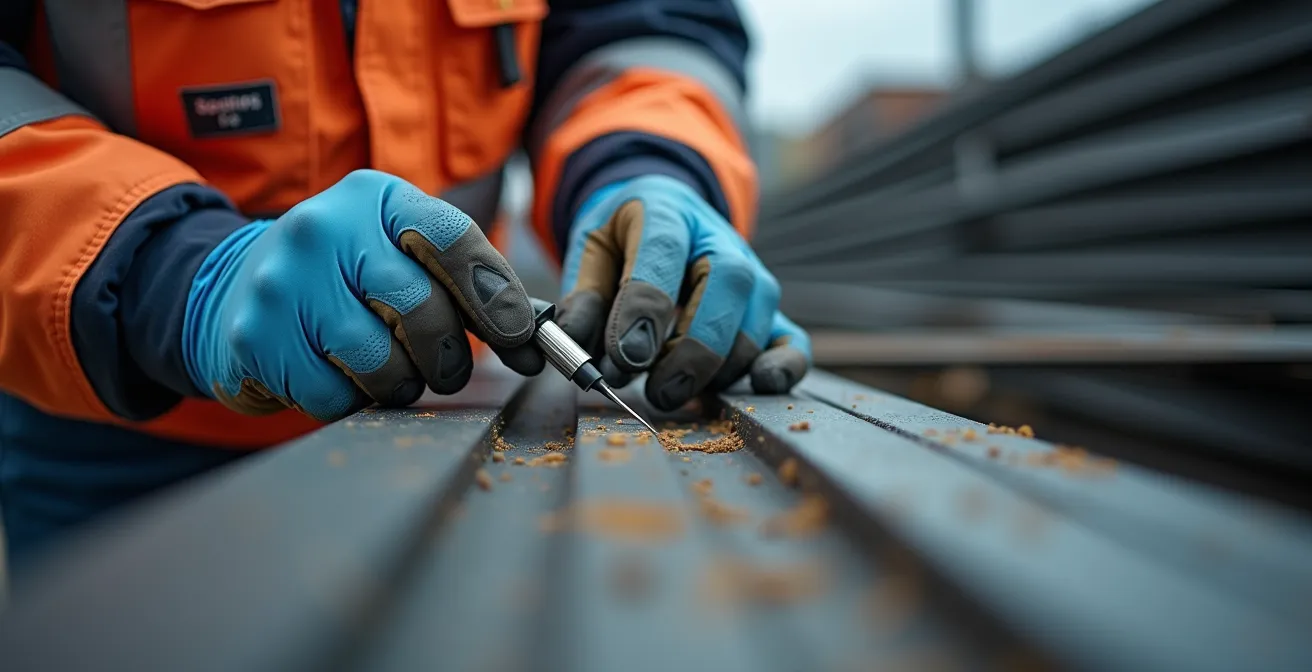
On-site material inspection upon delivery creates the critical verification checkpoint. Packages should display manufacturer labeling clearly identifying product line and performance ratings. Batch numbers and date codes allow tracing materials to specific production runs and confirming they match approved submittals. Materials exhibiting transport damage or moisture exposure should be rejected immediately rather than allowing installation with the assumption that defects won’t affect performance.
Storage condition monitoring prevents approved materials from degrading before installation. Roofing materials stored in direct sunlight or exposed to moisture contamination can experience adhesive failure, dimensional changes, or protective coating damage that compromises their tested performance characteristics. Contractors should maintain covered storage areas and elevate materials above grade to prevent ground moisture absorption.
| Test Method | Property Tested | Standard Applied | Frequency |
|---|---|---|---|
| Solar Reflectance | Thermal Properties | ASTM C1371 | Per batch |
| Adhesion Testing | Material Bonding | ASTM D6694 | Monthly |
| Xenon Arc | UV Resistance | ASTM D7869 | Quarterly |
| Corrosion Testing | Weather Resistance | ASTM B117 | Annual |
Daily installation verification ensures that approved materials actually reach the roof deck rather than being diverted or substituted during the installation phase. Homeowners or third-party inspectors should conduct random package inspections during installation days, photographing manufacturer labels and comparing them to approved submittals. This visible oversight dramatically reduces substitution incentives because contractors recognize that verification occurs unpredictably throughout the project timeline.
Understanding the principles of building workshop benefits reinforces why hands-on verification matters more than document review alone. Physical inspection of materials creates direct evidence that contract specifications are being honored rather than relying on contractor assurances or post-installation warranties that provide remedies only after failures occur.
On-Site Material Verification Steps
- Review material submittals against approved specifications before delivery
- Inspect materials upon arrival for damage during transport
- Verify storage conditions meet manufacturer requirements on-site
- Document batch numbers and certificates for warranty compliance
- Conduct daily verification that installed materials match approved submittals
Key Takeaways
- Material quality decisions create multiplicative cost impacts across structure, energy, insurance, and property value over 15-30 year lifecycles
- California environmental testing exposes failures through Class-A fire ratings, wind uplift thresholds, and zero-tolerance water penetration standards
- Manufacturer certification achieved by only 7% of contractors provides reliable quality differentiation beyond basic state licensing requirements
- Independent laboratory testing and daily on-site verification prevent material substitution that undermines specification compliance
- Insurance-backed warranty programs offer contractual protections extending 5-10x beyond standard workmanship coverage periods
Insurance-Backed Quality Guarantees and Contractual Protections
The warranty and insurance framework surrounding roofing installations creates enforceable quality guarantees that extend far beyond contractor workmanship promises. Understanding the distinction between standard coverage and premium protection programs reveals how contractual mechanisms can guarantee material quality delivery.
California’s evolving insurance regulatory landscape has intensified the connection between roofing material specifications and coverage availability. Recent regulatory changes mandate that insurers must cover 85% market share in wildfire zones as a condition for operating in preferred markets. This requirement increases insurer scrutiny of roofing material compliance and condition during underwriting processes.
The practical implication means that insurers now systematically verify Class-A fire ratings, impact resistance classifications, and installation quality before issuing or renewing policies in designated wildfire areas. Homeowners who installed subpar materials discover coverage gaps or non-renewal notices when insurers conduct property inspections and find non-compliant roofing systems.
Insurance companies must increase writing of comprehensive policies in wildfire distressed areas, whereas there is no current legal requirement for insurers to commit to providing any coverage.
– Ricardo Lara, California Insurance Commissioner Statement
Manufacturer warranty programs create multi-tiered protection structures that correlate directly with contractor certification levels and material grade selections. Standard workmanship warranties typically provide 1-3 years of coverage against installation defects, while material warranties offer 20-25 years of protection against manufacturing defects. These baseline warranties contain numerous exclusions and require homeowners to prove that failures resulted from material defects rather than installation errors or maintenance neglect.
Enhanced warranty programs available through certified contractors extend coverage dramatically across multiple dimensions. Workmanship protection increases to 10-25 years when installed by Master Elite or equivalent certified contractors. Material coverage extends to 50 years for premium product lines with non-prorated replacement guarantees that maintain full value throughout the coverage period.
| Warranty Type | Standard Coverage | Elite Coverage | Key Differences |
|---|---|---|---|
| Workmanship | 1-3 years | 10 years | 7-9 year advantage |
| Material | 20-25 years | 50 years | Manufacturer certification required |
| Wind Coverage | 60-90 mph | 160 mph | Hurricane-level protection |
Wind damage coverage within warranty programs deserves particular attention in California’s variable climate zones. Standard warranties typically limit wind coverage to 60-90 mph events and require visual evidence of widespread neighborhood damage to trigger coverage. Enhanced warranties extend wind protection to 160 mph—hurricane-force winds—and eliminate the neighborhood damage requirement, making individual claims viable even when surrounding properties remain intact.
The claims process differentiation between standard and enhanced warranties reveals the practical value of premium coverage. Standard warranties require homeowners to manage claim filing, coordinate inspections, and negotiate with adjusters while facing potential denial if documentation proves insufficient. Enhanced warranties typically include third-party claim advocacy where the manufacturer assigns representatives to manage the entire process and ensure timely resolution.
Contractual protection mechanisms beyond warranties create additional quality enforcement tools. Payment structures that retain final compensation until third-party inspection confirms specification compliance give homeowners leverage to ensure complete and correct installation before releasing funds. Detailed photographic documentation of all phases including deck condition, underlayment installation, and final surface application creates an evidence record for warranty claims or dispute resolution.
Performance bonds and completion guarantees provide financial protection if contractors fail to complete projects or remedy deficiencies. These instruments ensure that homeowners can hire replacement contractors to finish work or correct defects without bearing additional costs when original contractors default on their obligations.
Insurance Compliance Documentation Requirements
- Document Class-A fire rated roof installation for insurance credits
- Maintain defensible space compliance records for premium reductions
- Verify rebuild limits annually based on construction inflation rates
- Collect photo documentation of all mitigation features installed
- Submit clearinghouse applications for transition from FAIR Plan coverage
The integration of these protection mechanisms transforms roofing investments from gambles on contractor reliability into systematically protected capital expenditures. Homeowners who structure contracts to include manufacturer-backed warranties, third-party inspection protocols, and staged payment schedules create multiple enforcement layers that align contractor incentives with quality delivery rather than cost minimization.
Frequently Asked Questions About Roofing Excellence
What makes a roofing material specifically suitable for California’s climate?
California-appropriate roofing materials must satisfy three simultaneous requirements: Class-A fire ratings for wildfire resistance, high solar reflectance to manage extreme heat exposure, and wind uplift resistance rated to Class 90 minimum for coastal and mountain wind events. Materials meeting all three criteria typically include premium architectural shingles, concrete or clay tiles, and metal roofing systems that have passed ASTM testing protocols. Standard 3-tab shingles and economy-grade materials frequently fail one or more of these performance thresholds despite meeting basic building code minimums.
How can homeowners verify that contractors install the exact materials specified in contracts?
Effective verification requires three checkpoints: reviewing detailed material submittals with manufacturer specification sheets before approving procurement, inspecting packaging labels and batch numbers when materials arrive on site to confirm they match approved submittals, and conducting daily random inspections during installation to photograph manufacturer markings on materials being installed. Documenting this verification process with dated photographs creates an evidence trail for warranty claims and provides leverage to demand corrections if substitutions are discovered.
Why do manufacturer certifications matter more than contractor licensing alone?
State contractor licensing establishes minimum legal competency but doesn’t differentiate quality levels or specialized training. Manufacturer certifications like GAF Master Elite require documented completion of factory-led installation training, third-party audits of completed projects verifying code compliance, and maintenance of consumer complaint resolution systems. Only 7% of contractors achieve these certifications because the requirements exceed what most installers can satisfy. Certified contractors also provide access to enhanced warranty programs offering 10-25 year workmanship coverage compared to 1-3 years from standard contractors.
What warranty coverage differences justify premium material costs?
Premium materials installed by certified contractors typically provide 50-year non-prorated material warranties, 10-25 year workmanship coverage, and wind damage protection to 160 mph compared to standard warranties offering 20-25 year prorated material coverage, 1-3 year workmanship protection, and 60-90 mph wind limits. The enhanced warranties also eliminate neighborhood damage requirements for wind claims and include third-party claim advocacy that manages the entire claims process rather than requiring homeowners to negotiate with adjusters independently. Over a 30-year ownership period, these warranty differentials can prevent $15,000-$40,000 in out-of-pocket replacement costs.